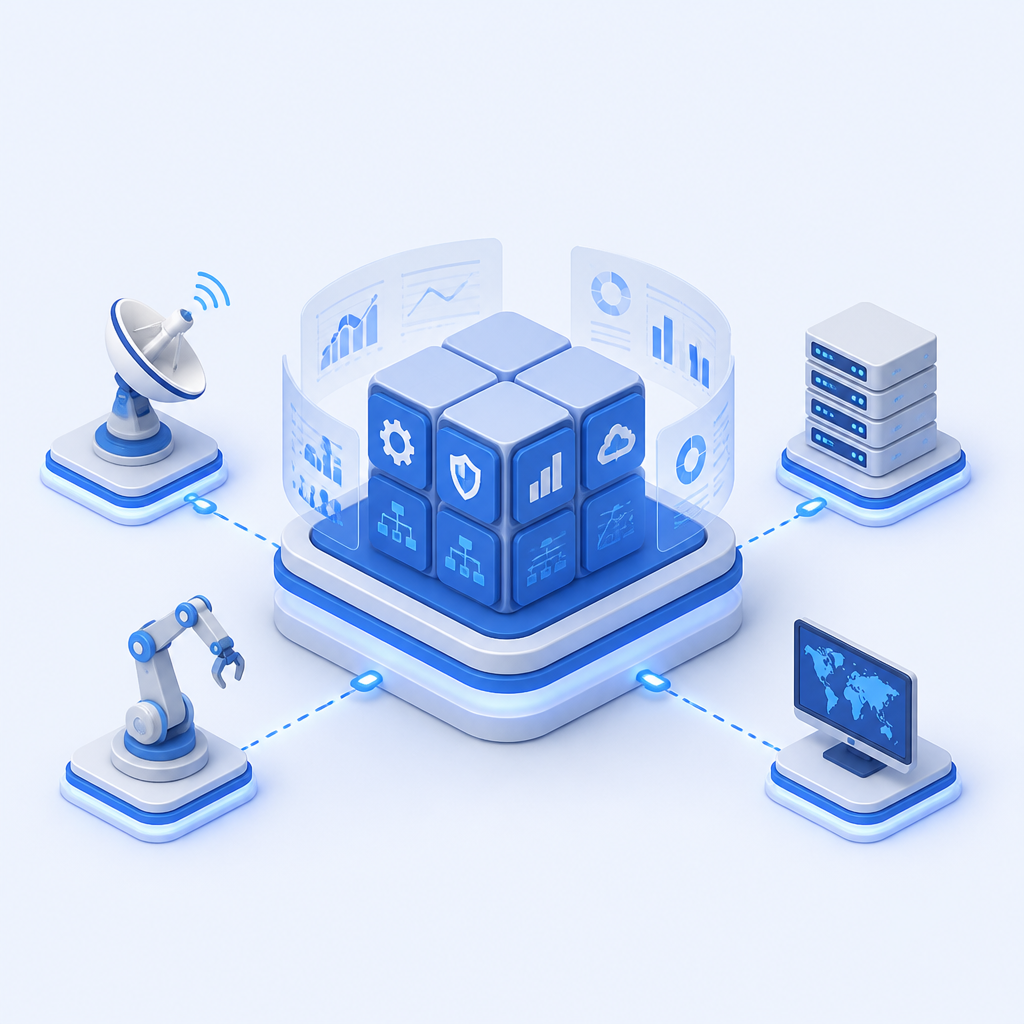

Order & Workflow Management
Unify order intake, processing, approvals, and fulfillment across systems.

Adding AI on top of existing systems is often the right first step. But as operations grow more complex, incremental fixes are no longer enough.
Most mid-market companies evolve the same way:
Eventually processes become harder to manage, systems stop aligning with how the business operates, and scaling introduces more complexity, not less. That's where an operational platform becomes necessary.
A system built around how your business actually runs — not another tool.
Typically sits alongside ERP, CRM, and accounting — and fills the gap between them.

Your systems exist — but they don't form a coherent operating model.
Operational platform patterns built to unify systems, workflows, and reporting at scale.
Unify order intake, processing, approvals, and fulfillment across systems.
Track projects, budgets, timelines, and communication across stakeholders.
Enable structured interaction between suppliers, partners, and internal teams.
Provide visibility and coordination across multiple business units or investments.
Deliver real-time insights across fragmented data sources.
AI is applied selectively, where it improves outcomes — not as a blanket solution.

Improve existing workflows before larger changes. Often the right first step.
Identify which workflows, systems, and data should be unified.
Validate critical parts of the platform before full development.
Deliver usable components incrementally — no big-bang releases.
Continue improving as business needs change.
User interfaces and tools your teams actually work in.
Automation and decision support embedded where it adds value.
Business processes structured, tracked, and auditable.
ERP, CRM, and external systems unified as a single source of operational truth.

Before
After
This approach reduces implementation risk, operational disruption, and upfront investment uncertainty.
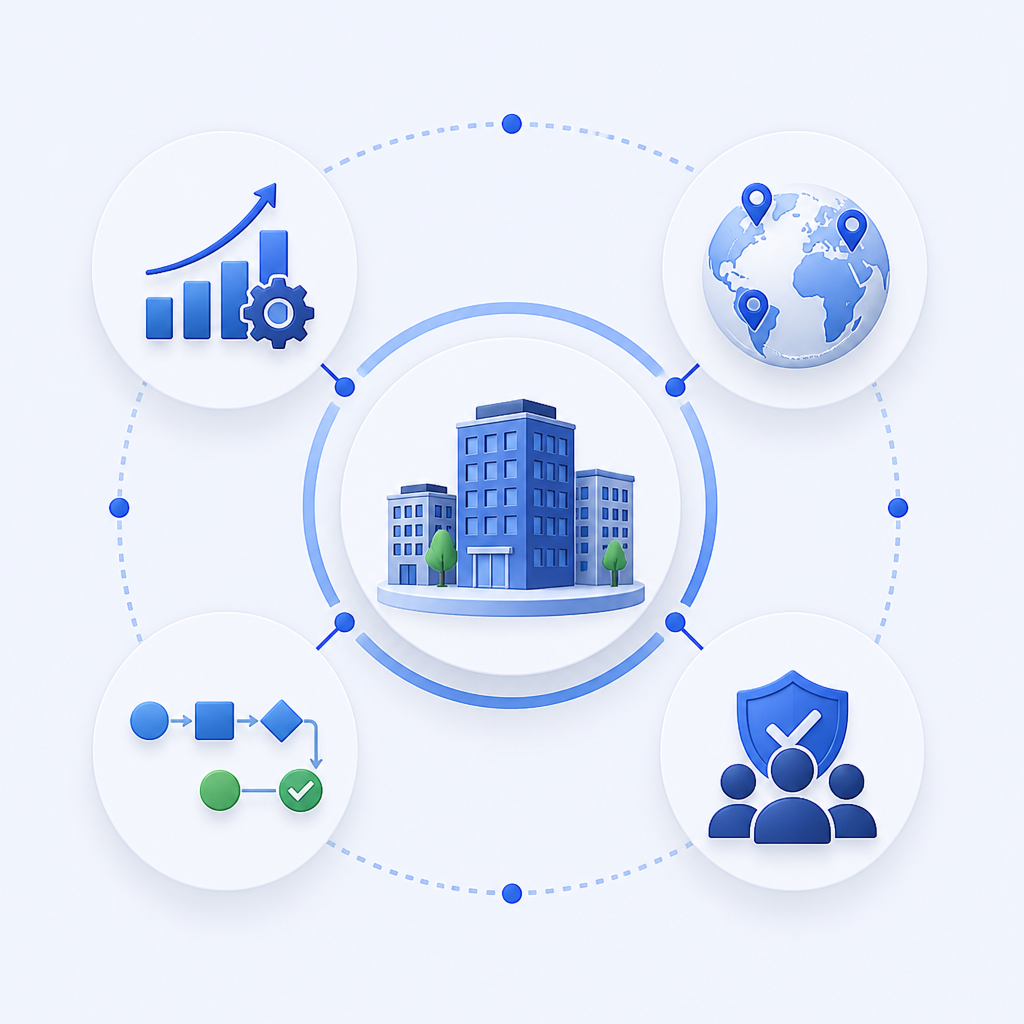
A system that connects workflows, data, and processes across an organization, enabling more efficient and scalable operations.
ERP and CRM systems handle specific functions. An operational platform connects and coordinates workflows across these systems.
No. Operational platforms typically integrate with existing systems and extend their capabilities.
When workflows become too fragmented, manual coordination increases, and systems no longer support how the business operates.
Platforms are built in phases. Initial components can be delivered quickly, with the system evolving over time.

