

Document Processing
Most operations are still driven by documents — invoices, purchase orders, contracts, forms. We automate extraction, validation, system entry, and workflow triggering.
Result: Faster processing, fewer errors, less manual work.

Most companies don't need new platforms. They need their current systems to work better.
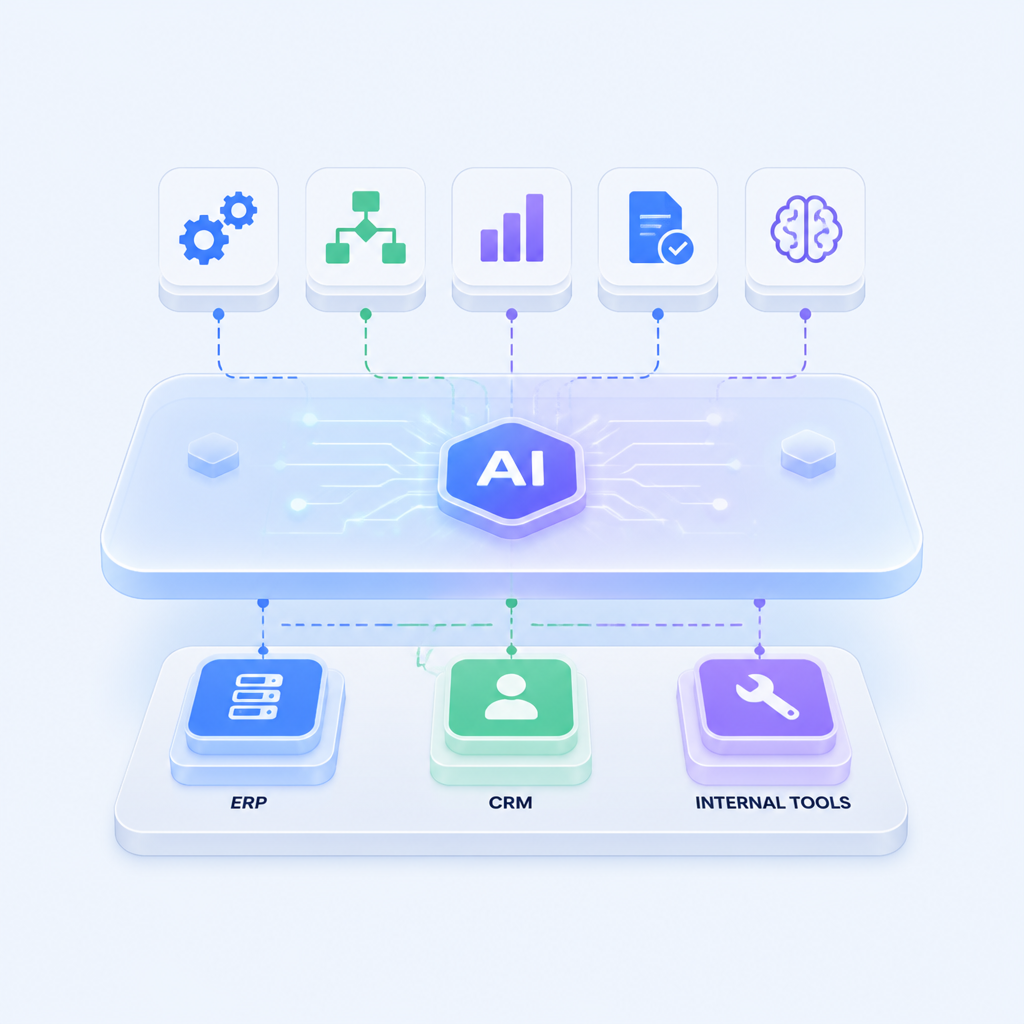
Argos adds an AI-powered operational layer on top of your ERP, CRM, and internal tools — automating workflows, reducing manual work, and improving decision-making without disrupting your business.
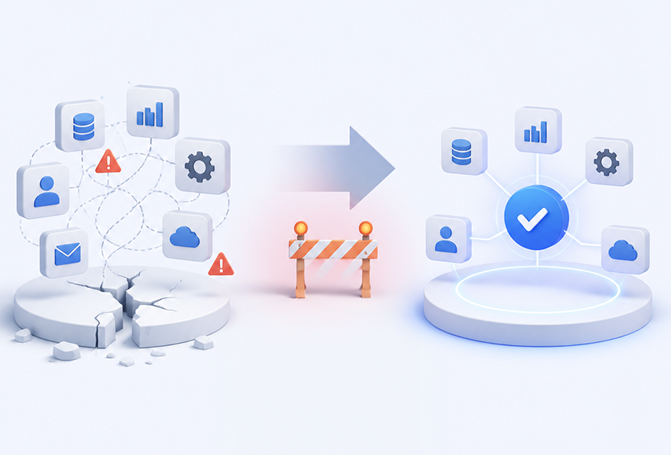
Replacing systems sounds like the right answer — but in practice, it creates risk. Most mid-market companies already have the right systems in place. The real problem is: those systems don't work together effectively.
An AI layer sits on top of your existing systems and improves how they operate.
What it does
What it does not do
Most operations are still driven by documents — invoices, purchase orders, contracts, forms. We automate extraction, validation, system entry, and workflow triggering.
Result: Faster processing, fewer errors, less manual work.
Many processes still run through email and informal coordination. We structure and automate approvals, routing, task handoffs, and exception handling.
Result: More predictable operations and less dependency on individuals.
Important information is often scattered across systems. We create structured access to SOPs, internal documentation, policies, and operational guidelines.
Result: Faster onboarding and fewer internal bottlenecks.
Data exists, but it isn't always usable. We enable real-time insights across systems, clearer reporting, and better operational awareness.
Result: Improved decision-making.
We focus on areas where manual work is high, delays are common, and errors are costly.
We connect to ERP systems, CRM platforms, internal tools, and document sources — without disrupting core systems.
We use AI selectively — document understanding, workflow decision support, pattern recognition — always within defined rules and controls.
Approvals remain controlled, exceptions are surfaced clearly, and processes remain auditable.
Deployed in Azure, AWS, or your own controlled environment.
Connects your existing systems through controlled, observable pipelines.
Task-specific AI systems operate within structured, supervised workflows.
Every action is defined, traceable, and reviewable.
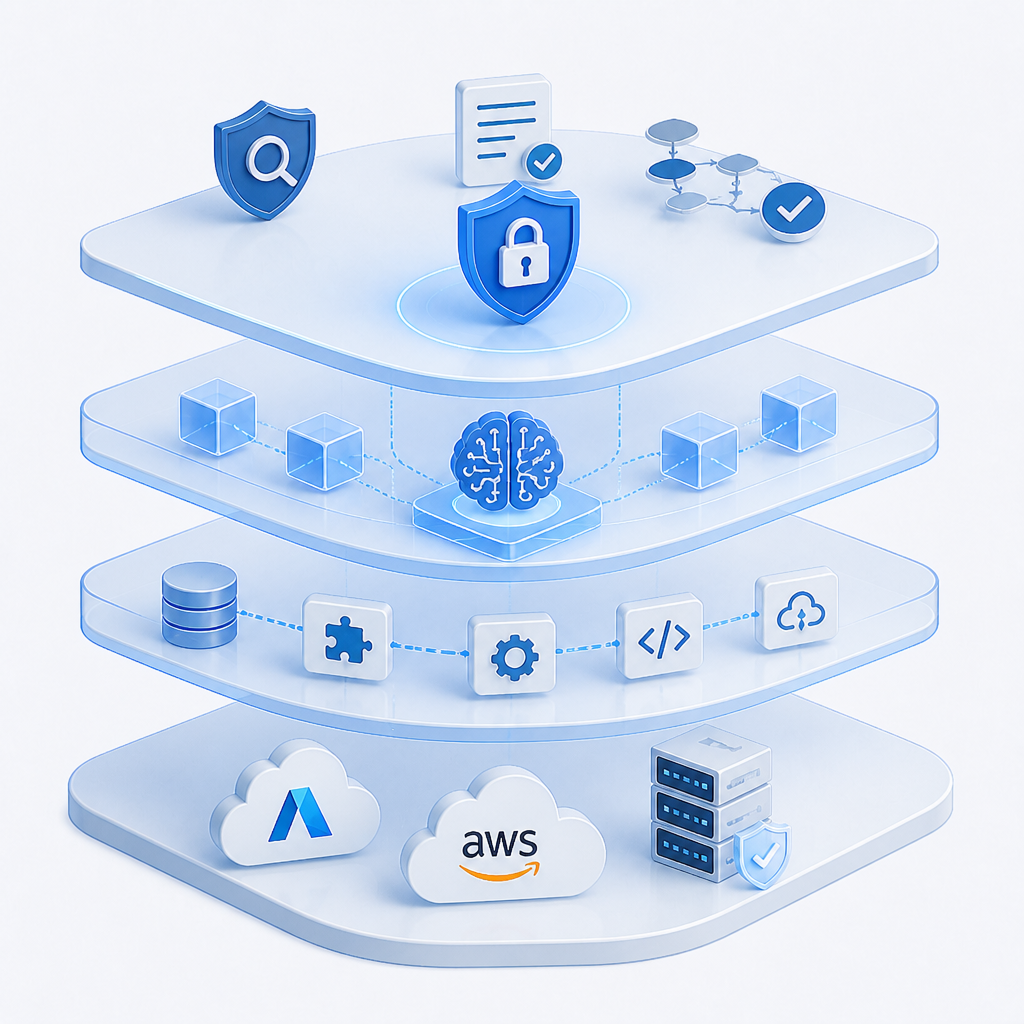
Behind the scenes, we use task-specific AI systems (sometimes called AI agents) to handle document processing, workflow routing, and decision support. They operate within controlled workflows — not as autonomous, unsupervised systems.

Before
After
Validate quickly, reduce risk, and scale confidently — only where the impact is proven.
Initial prototype
First production workflows
Expansion
An AI layer is a set of capabilities added on top of existing systems to automate workflows, process documents, and improve decision-making without replacing core software.
No. In most cases, we integrate with your existing systems and enhance how they operate.
Traditional automation follows fixed rules. AI allows systems to interpret documents, handle variability, and support more complex workflows.
Yes. Systems are designed to operate within controlled environments, with clear data handling and access controls.
AI is used within defined workflows with rules, validations, and human oversight. It is not deployed as uncontrolled automation.