

Operational Workflow Review
Key friction points, bottlenecks, and coordination gaps.

Most companies know there are inefficiencies in their operations. What's harder is knowing where AI can actually help, which workflows to improve first, and how to modernize without disrupting the business.
The AI Operations Audit helps you identify practical opportunities to improve workflows, reduce manual work, and strengthen operational visibility — using the systems you already have.
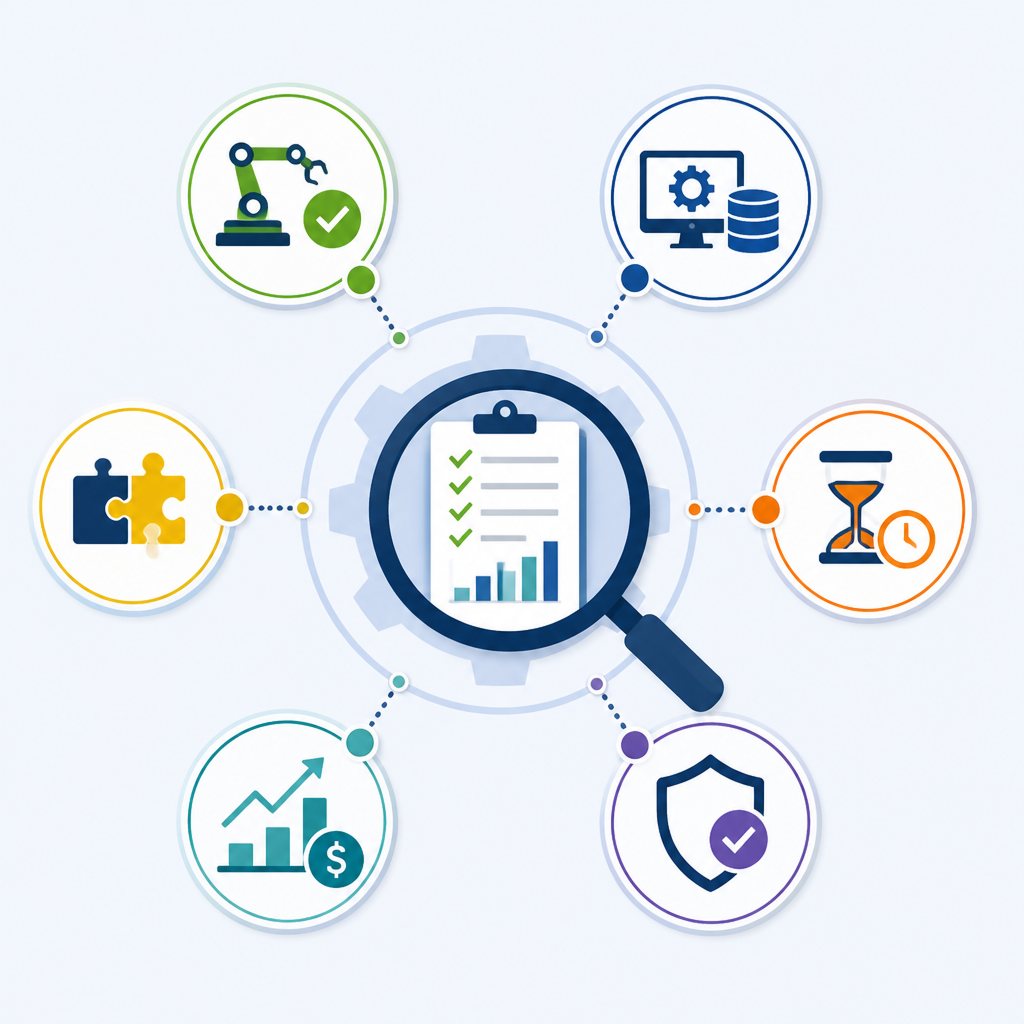
The problem usually isn't lack of technology — it's lack of operational clarity. The audit replaces guesswork with a prioritized, practical view.
Where manual work is excessive, approvals create delays, coordination depends on email or spreadsheets, and workflows lack structure or visibility.
Invoices, purchase orders, operational documents, approvals, and compliance workflows.
ERP, CRM, internal tools, reporting workflows, and the places where disconnected systems break data flow.
Where leadership lacks operational visibility, timely reporting, or reliable cross-system insights.
The goal isn't to produce a large strategy document. The goal is to provide practical direction your team can act on.
Key friction points, bottlenecks, and coordination gaps.
Where AI can realistically improve operations — and where traditional workflow improvements are more appropriate.
How systems currently interact and where fragmentation exists.
Which workflows should be addressed first based on impact and feasibility.
A phased path from prototype → automation → broader operational modernization.
We meet with operational and leadership stakeholders to understand workflows, systems, and current challenges.
We review operational processes, reporting workflows, integrations, document handling, and coordination models.
We identify automation opportunities, operational bottlenecks, AI use cases, and system improvement areas.
A prioritized plan with practical next steps you can act on immediately.
Reduce manual coordination and repetitive operational work.
Automate handling of invoices, forms, operational documents, and approvals.
Improve operational insights across disconnected systems.
Identify where operational platforms may provide long-term value.
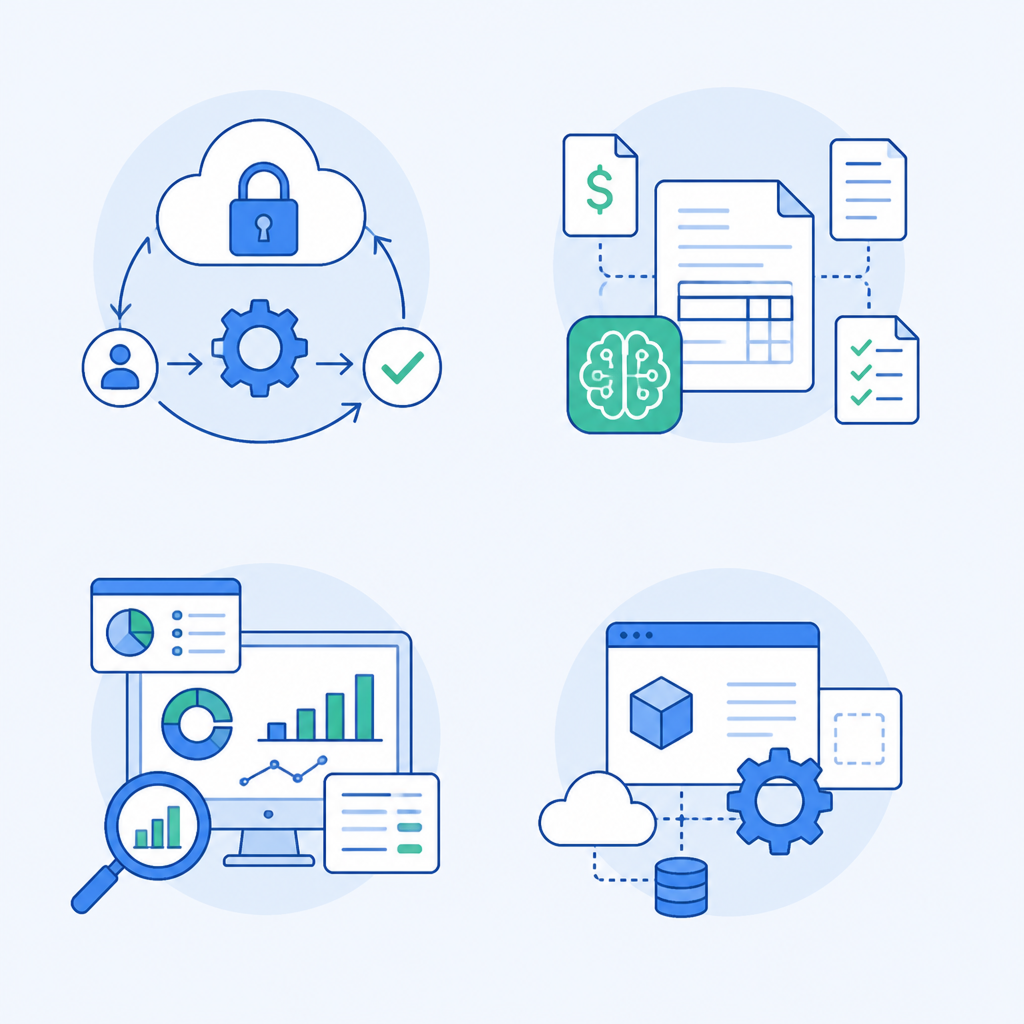
An AI layer is a set of capabilities added on top of existing systems to automate workflows, process documents, and improve decision-making without replacing core software.
No. In most cases, we integrate with your existing systems and enhance how they operate.
Traditional automation follows fixed rules. AI allows systems to interpret documents, handle variability, and support more complex workflows.
Yes. Systems are designed to operate within controlled environments, with clear data handling and access controls.
AI is used within defined workflows with rules, validations, and human oversight. It is not deployed as uncontrolled automation.